
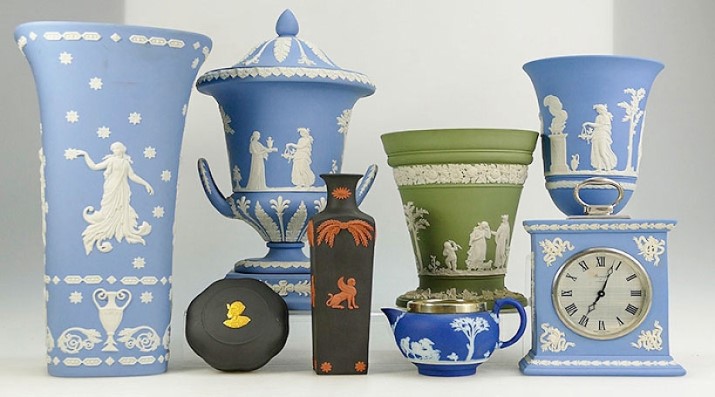
Wedgwood Pottery has remained collectable since its founding in 1759. Potteries Auctions have been selling Wedgwood Jasperware, tableware, and specialist collectable ceramics for over 35 years, so you can count on our vast knowledge in this incredibly diverse field. If you would like to discover the value of your Wedgwood, our specialists are happy to help, request a free valuation today or send us images via WhatsApp for expert advice.
Wondering What Your Wedgwood Is Worth?
Our specialists value hundreds of Wedgwood pieces every month.
✅ Free auction valuation
✅ No obligation
✅ UK ceramics experts
Are you looking to sell Wedgwood pottery, check the age or value of a piece, or simply want expert advice? Our ceramics specialists are here to help.
If you would prefer to speak with an expert in person, you can book a free appointment with our valuers at one of our salerooms. Alternatively, if it’s easier, you can submit photographs using our online valuation form, and a member of our team will be in touch with an assessment.
Valuations are also welcome via WhatsApp: send your images to 07864 667940.
How do I know if my Wedgwood Pottery is valuable?
Value can vary depending on the colour, pattern, and age of your Wedgwood pottery.
When looking for markings on your Wedgwood pottery it’s important to be vigilant, as there are many popular reproductions that are not authentic. This is where our experts can help.
Josiah Wedgwood was one of the first pottery manufacturers to mark pieces with his own name, so the best way to know if your Wedgwood pottery is valuable is to look for these markings on the bottom of your pottery.
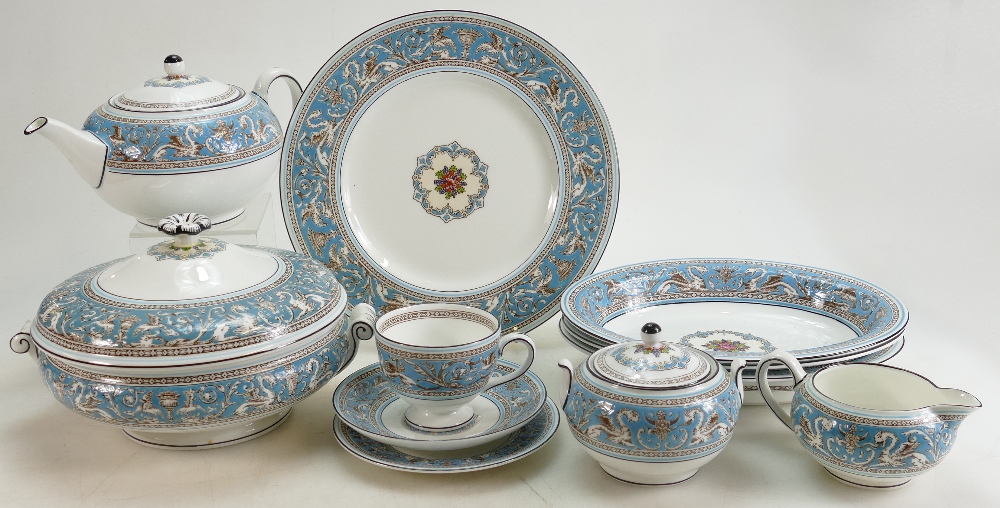
This large collection of Wedgwood Florentine patterned dinner and tea ware sold for an astronomical £1600 at our recent two-day auction of rare 20th century British Pottery, collectors’ items, jewellery and antiques
Why is Wedgwood Pottery famous?
Wedgwood is a fine bone china and porcelain pottery brand that was founded in 1759 by Josiah Wedgwood, an English potter and businessman based in Burslem, Staffordshire and remains very popular to this day. Remembered as the “Father of English Pottery”, Josiah Wedgwood created the well-respected Wedgwood brand through experimenting with clay and eclectic design. He most famously created the “Wedgwood Blue”, a colour that is now synonymous with the brand and recognisable worldwide.
In 1995, Wedgwood pottery was given the Royal Warrant, a significant mark of achievement for companies who have supplied goods to the Queen and the Royal Household, which is a wonderful accomplishment for the artists behind the Wedgwood.
What makes Wedgwood different?
Antique Wedgwood pieces are highly collectable and often pique plenty of people’s interest at our auctions due to the technical innovation. However, Josiah Wedgwood also lead the way for the industrialisation of pottery and focused on manufacturing pottery for the masses too. This means there are wonderful Wedgwood pieces that are both affordable and collectable and has inspired a number of important artists, including Eric Ravilious Wedgwood pieces.
What markings should I be looking for on Wedgwood Pottery?
Some identifying features to look out for:
- The Maker’s Mark – Your Wedgwood pottery should have a maker’s mark on the bottom. However, please note some pieces from the 18th century might not have this mark.
- Date Marks – These trademarks allow collectors to determine the approximate age of a piece and the time period it was produced.
Get a Free Auction Estimate for Your Wedgwood Pottery
Wedgwood marks from 1759-1780

The first impressed mark on earthenware from 1759-1769.
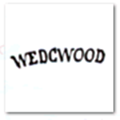
A rare mark. Used on the bell works from 1764-1769.
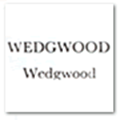
Often shown in different sizes, this mark was used in 1759 and 1769.
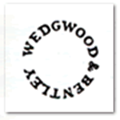
Used in 1769, this mark is a circle mark without rims.
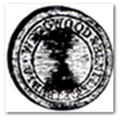
Used from 1769-1780, this mark shows the word ‘Etruria’.
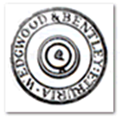
This mark was used from 1769-1780 and has lines inside and outside. This mark is not seen on Jasperware.
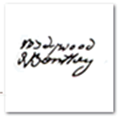
This marking was used from 1769-1780 and was originally a handwritten mark.
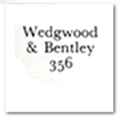
This marking was used from 1769-1780 and was impressed on intaglios. The number 356 is the Wedgwood and Bentley catalogue number.
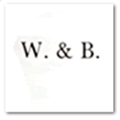
This mark was used from 1769-1780 and was used on very small intaglios.
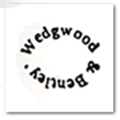
These rare markings can be seen on plaques and ornamental wares, used from 1768-1780.
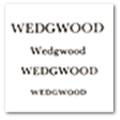
You’ll find these markings in various sizes, used from 1768-1780.
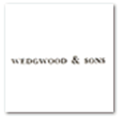
This mark was used from 1780-1795, and it is rumoured to have been used after the death of Bentley.
Not sure which Wedgwood mark you have identified? Many early marks can indicate highly collectable pieces. If you would like expert confirmation, our specialists offer free valuations, simply upload images using our online valuation form.
Wedgwood marks from 1790-Present Day
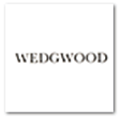
This very rare mark was used for just a short time in 1790.
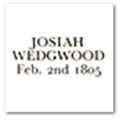
The Feb 2nd date indicates the first time this design was used in 1805.
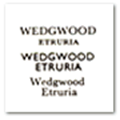
Used from 1812-1822, this marking is often found on bone china or earthenware.
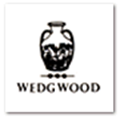
This design has been used since 1769 and was often impressed directly into Queensware or printed in colour.
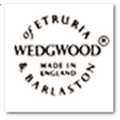
Used in 1840 for a brief amount of time.
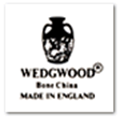
Used from 1879-1900. You might also find this marking with three stars beneath the vase, a version that was used from 1900 onwards.
From 1891, the word ‘ENGLAND’ was added to the Wedgwood mark. This was to allow for customs regulations and exports to the United States.
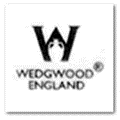
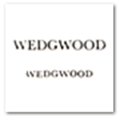
This marking was used from 1940 onwards and was the first use of the registered trademark symbol in a design.
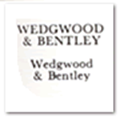
Photo credit for markings: Antique Marks
The Wedgwood standard impressed mark
The standard impress mark ‘WEDGWOOD’ appears on ceramics that also have a three-letter code. Within the three-letter code, the third letter is associated with a year. The table below shows the details.
These impressed markings first appeared in 1860 with the year letter O.
After 1891, the word ‘ENGLAND’ was added to the mark.
| O – 1860 P – 1861 Q – 1962 R – 1863 S – 1864 T – 1865 U – 1866 V – 1867 W – 1868 | X – 1869 Y – 1870 Z – 1871 A – 1872 B – 1873 C – 1874 D – 1875 E – 1876 F – 1877 | G – 1878 H – 1879 J – 1881 K – 1882 L – 1883 M – 1884 N – 1885 O – 1886 P – 1887 | Q – 1888 R – 1889 S – 1890 T – 1891 V – 1893 W – 1894 X – 1895 Z – 1897 |
From 1898 the letters ‘A’ to ‘I’ were reused, however these are easy to differentiate as they have ENGLAND along with the WEDGWOOD marks.
A-1898 B-1899 C-1900 D-1901 E-1902 F-1903 G-1904 H-1905 I-1906
Recent highlights from our Fine Art Sale


What Wedgwood Are We Currently Looking For?
We are currently seeking desirable Wedgwood pottery for forthcoming specialist ceramics auctions.
We are particularly interested in:
Jasperware
Classic and unusual Jasperware pieces, particularly rare colours, forms and designs.
Rare & Early Wedgwood
Early examples and unusual historical pieces with desirable marks or provenance.
Unusual Patterns & Colours
Less commonly encountered designs and colourways can attract strong collector interest.
Complete Services
Dinner services, tea sets and other complete or substantial collections.
Figurines & Decorative Pieces
Collectable figures and unusual decorative Wedgwood.
Collections
Large private collections can offer an opportunity to present related pieces together in a specialist auction.
Have something similar?
Even if you’re unsure whether your Wedgwood is valuable, our specialists would be happy to take a look.
Where to sell your Wedgwood Pottery
If you are looking to buy or sell Wedgwood pottery, collectables or figurines, our team of experts at Potteries Auctions can help. Request a call back if you are looking for an expert evaluation and are seeking to sell some Wedgwood at auction. Whilst the markings might appear confusing, our experts can help identify and value your pottery in no time at all. We can sell or value your items.
Book an in-person valuation
FAQ
Wedgwood pottery is usually identified by an impressed or printed mark on the base of the piece. The most common mark is the word “WEDGWOOD”, sometimes accompanied by additional letters, numbers, or the word “ENGLAND”.
Earlier pieces may have slightly different stamps, symbols, or handwritten-style marks, while modern examples often include date codes that help determine the year of manufacture. The style of the mark, together with colour, pattern and material, helps narrow down the production period.
If your mark is unclear or worn, our specialists can usually identify it from a photograph and confirm the age and authenticity.
The value of Wedgwood pottery depends on several factors, including age, rarity, pattern, condition, and demand among collectors. Early Jasperware, limited production pieces, unusual colours, and complete sets often achieve higher auction prices.
Not all Wedgwood is valuable, but some pieces regularly sell for hundreds or even thousands of pounds at auction. Marks alone do not determine value — condition and desirability are equally important.
The most accurate way to determine value is through an expert auction valuation, where specialists assess current market demand as well as the mark and design.
Wedgwood pottery can be sold through specialist auction houses, antique dealers, or private sales, but auctions often achieve the strongest prices because collectors compete to buy rare or desirable pieces.
A specialist ceramics auctioneer can also identify marks, estimate value, and advise whether a piece is suitable for auction.
Potteries Auctions offers free, no-obligation valuations for Wedgwood and other British ceramics, either in person or from photographs.
Most Wedgwood pottery is marked, as Josiah Wedgwood was one of the first manufacturers to consistently stamp pieces with his name. However, some early examples from the 18th century may have faint, partial, or missing marks due to wear or production variations.
Unmarked pieces are not automatically reproductions, but identification becomes more reliant on material, craftsmanship, and design features. Expert assessment is often needed to confirm authenticity and age.
Yes. Our specialists provide free auction valuations for Wedgwood pottery. You can submit photographs online or arrange an appointment at our salerooms, and we will advise on age, authenticity, and current auction value.
You can:
Submit images through our online valuation form
Send photos via WhatsApp 07864 667940
Book an in-person appointment
Email: enquiries@potteriesauctions.com
2 thoughts on “Wedgwood Marks Guide: Identify & Value Your Wedgwood”
Comments are closed.